

For a group of three to fifteen restaurants, San changes one specific thing: the same question gets the same answer at every site, drawn from the same written procedure, with its source, and within the permissions of the person asking. It leaves the rest alone. Deciding that a site works differently, adapting a recipe to a smaller kitchen, judging that a local variation is better: that is still a manager's job.
Thursday, 8:05 a.m., in the rain
Edmond runs a group of seven restaurants. He is parked outside the fourth one, engine off, rain on the glass, phone in hand. Before he walks in, he wants to know whether the new thawing procedure sent out on Monday has been read everywhere, and whether the station site has filed its weekly report. He is also thinking about the cook who is rotating between three sites this month and who, yesterday, used the station site's method at the city-centre site.
Meanwhile Coumba, who manages the station site, gets a question from that same cook: "Do we prep the sauces here the same way as in the city centre?" She does not know exactly how the city centre does it. She knows how her own kitchen does it.
(Fictional scene and characters.)
Nobody is wrong here. What is missing is one place where the shared version and the local version are written down, and something to repeat them at the right moment.
Why a group multiplies the questions
The shared procedure exists, in several copies
A document sent by messaging app, printed at site 1, copied out at site 3, corrected by hand at site 5. Six months later there are four versions and none has a date. The topic is covered in depth in an outdated procedure is more dangerous than a missing one.
Local variations are written nowhere
The station site has a smaller kitchen and a different fridge layout. Coumba changed the order of the prep, and she was right to. But the change lives in her head and her team's.
The person who rotates between sites pays for the difference
An extra, a cook sent as cover or a trainee manager moving from one restaurant to another learns three ways of doing the same thing, without knowing which one is the rule. They do their best, and get it wrong in the wrong place.
The area manager is never there at the right time
Edmond cannot be in seven kitchens at 10 a.m. He finds the gap on a visit, days later. The pillar article how to manage multiple restaurants without being everywhere explains the mechanics.
What San changes, in practice
- The same answer wherever the procedure is shared. If thawing is written once for the group, the cook hears the same thing in the city centre and at the station.
- An answer that says where it comes from: which procedure, which date. The cook can tell a colleague "it's Monday's sheet", and Edmond can check.
- An answer within each person's permissions. In Tsuno, permissions follow role and site: the cook sees what his assigned sites allow, Coumba what her manager role opens up. San only sees what the person already sees (see give your AI the same rights as you, no more).
- An "I don't have that information" when the local variation is not written, instead of an answer borrowed from another site.
- A drafted report when a step looks wrong, which the person confirms before it is sent. The fix goes back to whoever owns the procedure, following a wrong step in a checklist: flag it, fix it for everyone.
What San does not change
Local adaptation stays human. San does not decide that a variation is acceptable, does not merge two versions, does not pick the better method between two sites. Nor does it compare teams or score anyone: it puts facts side by side, and Edmond or Coumba decide. Its full limits are in what San never does.
It does not replace the visit either. In ten minutes in the station kitchen, Edmond will see what no answer tells him: the mood, the tiredness, the way the new cook holds his station.
What must be shared, what can be local
| Topic | Shared across the group | Can be local, if written down | What the assistant should say |
|---|---|---|---|
| Hygiene and temperatures | Thresholds, check frequency, corrective actions | Where the equipment is, time of the check | The shared rule, then the site's equipment |
| Allergens | The approved dish sheet | Nothing | The sheet, never an answer from memory |
| Signature recipes | Portions, ingredients, plating | Production order suited to the kitchen | The shared recipe, plus the local workflow if there is one |
| Prep | What must be ready, and by when | Order of tasks, which station does it | The checklist for the site you are in |
| Cleaning | Products, frequency, critical areas | Split between stations | The procedure, then who does it here |
| Opening and closing | Mandatory checks | Alarm, keys, deliveries, neighbours | The site's checklist, with its specifics |
| Onboarding | House rules, safety rules | Introducing the team and the premises | The shared path, then the site's step |
Read each row left to right. If the middle column is not written, the assistant can only point to the shared rule or say it does not know, which beats making something up. The three-level logic (fixed, adaptable, free) is set out in how to standardize multiple restaurants without making them identical; the question here is what the assistant repeats.
A method for a group getting started
Pick three procedures that cause trouble
The ones the rotating staff get wrong most often. Not the whole binder.
Write the shared version once
Edmond, or whoever owns quality, writes and dates it. Old copies come off the walls at every site the same day.
Ask each site manager for their variations
Coumba writes down what she does differently and why. Edmond approves it, rejects it, or rolls it out to the whole group if it is better.
Test with the person who rotates
They are the best judge. If they get the same answer in the city centre and at the station on the shared part, and the right variation on the local part, the procedure holds.
Review every month
Unwritten variations creep back fast. A short review, site by site, is enough.
Common mistakes
- Asking the assistant to "guess" one site's method from another's. An unwritten variation does not exist for it.
- Writing the shared procedure without taking down the old printed copies. Paper contradicts the tool.
- Letting each site manager edit the shared version for their own site. You are back to four copies.
- Confusing the same answer with the same kitchen. Two sites can follow one rule with different workflows.
- Expecting the tool to say which site works best. That judgement belongs to the manager, based on facts and on the spot.
What to measure
- How many "how do we do it here?" questions rotating staff ask the site manager over two weeks.
- The share of shared procedures that exist in a single dated version.
- The number of local variations written and approved, per site.
Where Tsuno and San come in
Tsuno was born at Kajirō Sushi, its founder's restaurant group, out of a simple observation: the bigger the business grew, the more people had to repeat themselves, check up and chase information. We even closed a restaurant there for lack of written processes. The story is told in the story of San, born in a kitchen. We draw no figures from it.
Today, Tsuno for restaurants files procedures and documents by site, runs opening and closing checklists, and manages permissions by role and by site. From two sites up, the Network view puts key figures, audits, weekly reports and the schedule side by side, for supervisors and above, limited to the sites they are assigned to. The details are on the features page. Edmond can ask Tsuno questions in plain language, from Tsuno or from his usual AI assistant, with his own permissions.
San Voice, the voice interaction, is available in demo; San Audio (hands-free) and San 360 are under exploration and testing. Showing a shared version and its local variation side by side, and saying which one applies here, is what a good group tool should do, and it is something we are working on.
Further reading
From head office's point of view, read franchises: what head office sees and what it does not and how to open a sixth restaurant without multiplying chaos. The same reasoning applied to one bakehouse and its shops is in a work assistant for bakeries. The framework is in the pillar page AI for frontline managers. On every site, two moments matter: the pre-service briefing and planning that anticipates rather than reacts.
Key takeaways
San gives a group one sourced answer for what is shared, within each person's permissions. What is local has to be written by a person, or the assistant has nothing to repeat.
Frequently asked questions
What does an assistant like San change for a multi-site restaurant group?
It gives the same answer, drawn from the same written procedure, at every site where that procedure applies, and it says where the answer comes from. It does so within the permissions of the person asking, site by site.
How do you handle a shared procedure with local variations per restaurant?
Write the shared version once, then the local variation next to it, with the site, the date and the reason. A good tool should show both and say which one applies at the site you are in.
Does an employee who works across several sites see every restaurant's procedures?
They see what their role and assigned sites allow. In Tsuno, permissions follow role and site, and San only sees what the person can already see.
Can the assistant decide that a site may depart from the shared procedure?
No. Deciding that a site does things differently is a manager's call, and it should be written and dated. The assistant can flag a mismatch between two versions, it does not settle it.
Was Tsuno designed for restaurant groups?
Tsuno was born at Kajirō Sushi, its founder's restaurant group, because as the business grew people had to keep repeating themselves, checking up and chasing information. It works for a single site, and the Network view appears from two sites up.
Keep reading

Multiple restaurants
Anticipate rather than react: AI and restaurant planning
Anticipating means seeing what keeps repeating: missed logs, recurring breakdowns, uncovered shifts. AI lines up these dated signals; the owner decides.
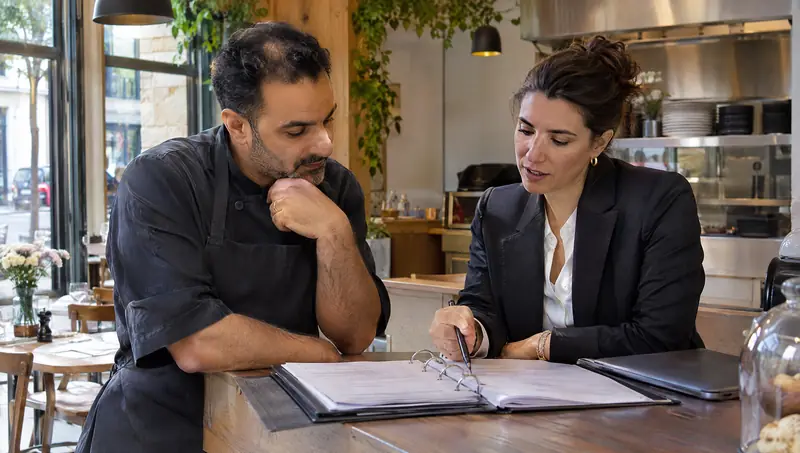
Multiple restaurants
Franchises: what head office sees, and what it does not
Head office can see whether standards are applied, compliance and aggregated incidents. Staff data stays with the franchisee, who is the employer.
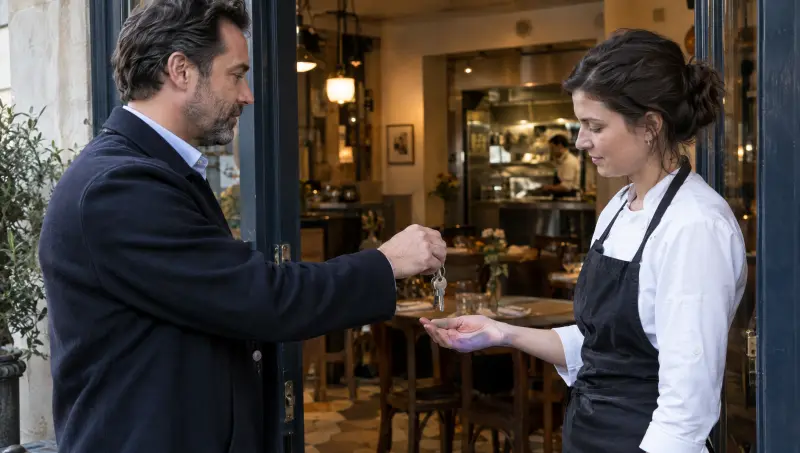
Multiple restaurants
How to delegate a restaurant without losing control
To delegate a restaurant, write down what the manager decides alone, what they flag and what escalates, then review facts rather than moods.