
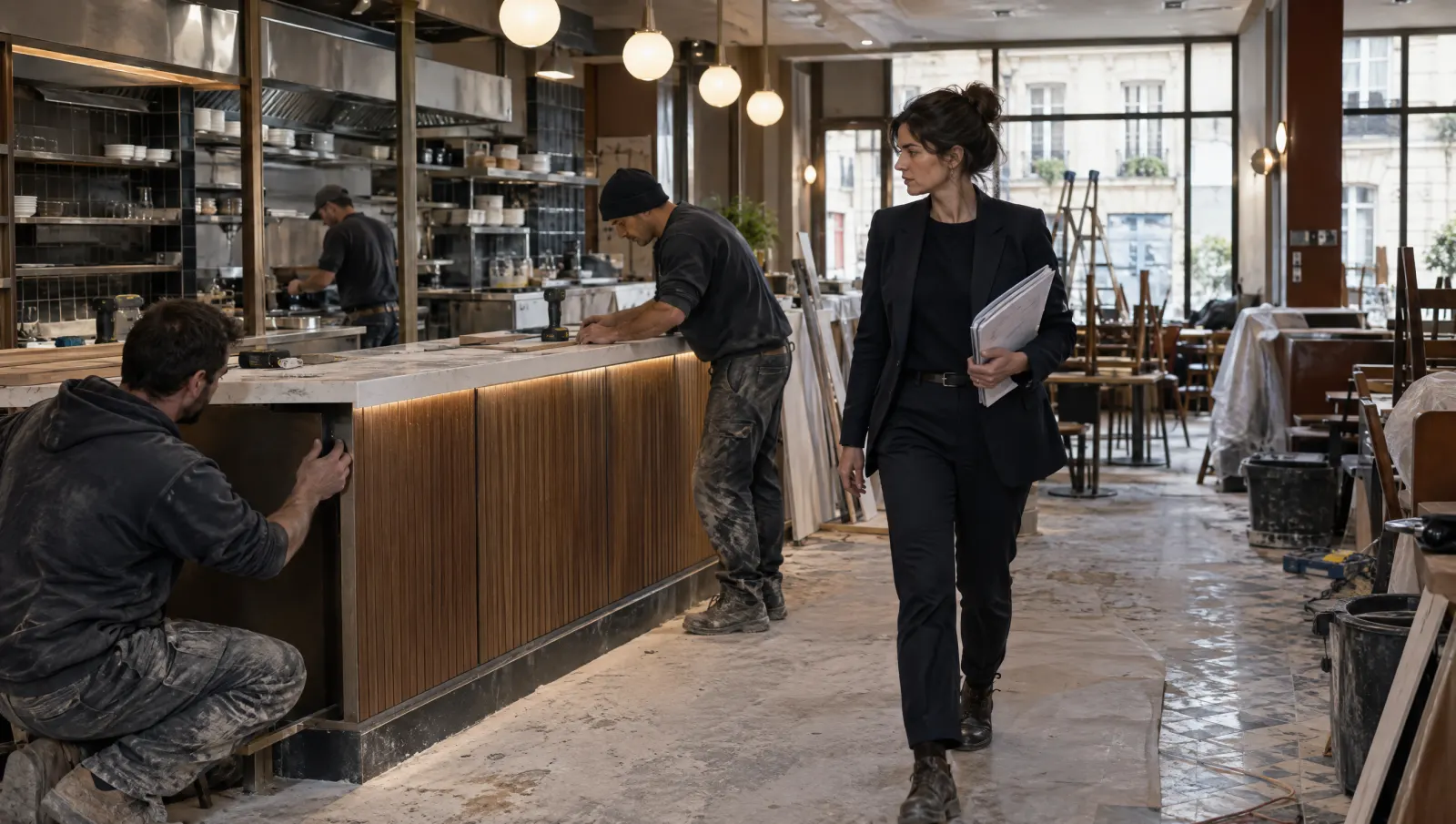
To open a sixth restaurant without multiplying chaos, the framework has to exist before the team does: a typical day for each role, non-negotiable standards, a first-month onboarding path and three drift signals chosen in advance. If those elements live in the heads of your current managers, the new opening copies their habits and their blind spots, and the owner becomes the switchboard for the new location.
The Thursday before opening
The sixth location's manager was hired three weeks ago. Competent, comes from another brand. On Thursday morning, they call the owner: how is the hot station set up, who orders the bread, what time do the stocks go on, where are the allergen instructions. The owner answers from memory, then points them to the first location's manager, who answers differently.
That evening, the line cook who started Monday asks three people how to label prepped items. She gets three answers. Nobody made a mistake: each passed on what they know. The problem is that there is no place where "what the group knows" is written down once.
Why each opening costs more than the last
Three causes come up almost every time.
The group's knowledge is spread across individuals. With two restaurants, the owner was the link in person. By the sixth, every question runs through a chain of people who do not hold the same version.
Local workarounds were mistaken for standards. One location changed the order of its prep because its kitchen is narrow. That becomes "the group's way of doing it" the moment a manager from that location leaves to open somewhere else.
Training depends on whoever is available. At opening, your best people are needed everywhere at once. So training happens fast, with no shared material, using whatever each person has in their head.
On top of that comes overload: the opening absorbs the owner, which reduces attention on the five locations already running. That is where drift sets in.
The opening file in six steps
1. Take stock of what you already repeat
Before writing anything new, list what you tell every new hire and every new manager. The owner and two managers spend one quiet hour on it. Format: a plain list, one topic per line.
2. Write the typical day for each role
For each role at the new location: tasks, time, duration, who signs off. Start from the typical day at the nearest location and note the differences caused by the layout. Proof it works: every task has a role and a time.
3. Separate the framework from local adaptation
Sort each rule into three columns: identical everywhere, adaptable with justification, free. The table below works as a template.
| Item | Identical everywhere | Adaptable (to be justified) | Free |
|---|---|---|---|
| Food safety and allergens | Yes | ||
| Recipe specs for signature dishes | Yes | ||
| Order of prep | Depends on kitchen layout | ||
| Local supplier | Depends on delivery area | ||
| Floor energy, atmosphere | Yes |
4. Prepare the first-month path
For each key role, an outline: what you show on day one, in week one, and what must be validated before the person works independently. It gets prepared before final hiring, not during opening week. The assigned mentor receives it before the new hire arrives.
5. Choose three drift signals
Decide now what you will review every week during the location's first weeks: for example opening tasks left undone, missing logged checks, questions escalated to the owner. Three, not ten. Put the review date in the owner's calendar.
6. Fix who answers what
For the first ten days, write down who answers questions about recipes, scheduling and suppliers. One sponsor manager per area, not an owner reachable at all hours.
Mistakes that reproduce the chaos
- Copying the "star" location wholesale, personal habits included.
- Writing procedures during opening week, when nobody has time to review them.
- Training the new manager by immersion in a single location, which becomes their only model.
- Multiplying daily check-ins with the owner instead of defining what gets escalated and what gets settled on site.
- Failing to tell the existing locations that they will lose a few key people during the opening.
What to track in the first weeks
- Questions escalated to the owner: how many, and above all what kind. The same question asked twice points to a gap in the framework.
- Tasks from the typical day actually done and signed off, role by role.
- The gap between planned and completed onboarding paths: who validated what, and on what date.
Where Tsuno comes in
Tsuno keeps the group's memory: standards, typical days by role, onboarding paths and expected skills, written once and then assigned to the new location. The content can be delivered pre-filled from your existing documents, with human validation of anything sensitive. The owner can then ask in plain language how the week went at the new location. Tsuno does not replace your POS or your payroll, and it does not judge people: it connects the facts. See the setup page.
Further reading
The general case is covered in how to manage multiple restaurants without being everywhere. The move to three locations, where the first real problems appear, is detailed in why the third restaurant changes everything. For the people side, read how to prepare a restaurant opening from the people side, and to stop each location from training in its own way, how to stop training new hires differently at every location.
Key takeaways
A sixth location is won before it opens: what is written down and assigned gets passed on, and what stays in people's heads gets distorted. Separate the framework from local adaptation, prepare the first month of each role, and choose your three drift signals before the team arrives.
Frequently asked questions
What should be written down before opening a new restaurant in a group?
At a minimum: the typical day for each role, the non-negotiable standards (food safety, recipes, guest welcome), the first-month onboarding path, and the list of what gets ordered and checked. Without these, the new manager rebuilds everything from memory.
Should we copy the best-performing restaurant exactly?
No. Copy the framework (standards, rhythm, the way knowledge is passed on), not the local workarounds that grew out of one specific kitchen or one specific person. Every deviation you keep should be named and justified.
Who should train the new location's team during the first weeks?
A pair from an existing location can demonstrate the techniques on site, but they must work from the same written materials as everyone else. Otherwise the new location inherits the trainer's personal habits.
How do you know whether the new restaurant is drifting in its first weeks?
Choose three observable signals before opening, for example opening tasks left undone, missing logged checks, and questions escalated to the owner. If one of them keeps recurring, look at the framework and the training first.
Can we open a location while keeping our current POS and scheduling software?
Yes. Keep the POS, scheduling or payroll tools that work, and decide for each area which tool is the source of truth. What is almost always missing is the memory of standards and training, not yet another management tool.
Keep reading

Multiple restaurants
How to manage multiple restaurants without being everywhere
Managing several restaurants without being everywhere means moving from presence to exceptions: a few fixed questions, written standards, dated facts.
Multiple restaurants
How to standardize multiple restaurants without making them identical
Standardizing means fixing what never varies (safety, recipe, guest promise) and documenting what each location adapts, to keep identity without drift.

Multiple restaurants
Opening a third restaurant: why your presence is no longer enough
At the third site, the founder can no longer cover the system's gaps by being there. Here is what breaks, in what order, and what to put in place beforehand.