

Talking to your tools is useful when your hands are full and the question is short: your next task, a cleaning step, what is left on the opening checklist. Everywhere else, the screen does a better job: under a loud hood in the middle of a rush, when you need to read a full sheet, and above all in front of a guest. Voice is one more option, never an obligation: everything you can ask out loud should still be doable on screen.
Saturday, 6:10 a.m., in the bakehouse
Malika is shaping brioche. She has flour up to her wrists and a tray to finish before the dough slackens. A question crosses her mind: has anyone logged the display fridge temperature yet, or is that still on her? The tablet sits on a shelf three meters away. To check it, she would have to wipe her hands, wash them, walk over and leave the dough waiting. The head baker is in the walk-in. She is not going to call him for that.
So she does what everyone does: she guesses. Someone has probably done it. At 7:30, nobody has.
This scene is fictional, but anyone who has worked a morning shift will recognize it. She does not need a closer screen. She needs to be able to ask without letting go of the dough, "What's left on the opening checklist?", and hear a one-sentence answer.
Why screens get in the way when you work with your hands
With gloves or flour on your hands, every touch is one more step
Touching a screen with dirty gloves means contaminating the screen, then everything you touch after it. Good practice is well known: take the gloves off, wash your hands, put on a fresh pair. It is the right rule. But it turns a few-second question into a real break. Eventually, people stop asking.
In the walk-in or the storeroom, the screen stayed somewhere else
You walk into the walk-in with your arms full of containers and want to get out fast and shut the door. Your phone is in your pocket, the tablet is at the pass. In the storeroom, while receiving a delivery, it is the same story: boxes first, screen later.
At the dish station and during cleaning, water, chemicals and thick gloves
At the dish station, your hands are wet. During cleaning, they are in a chemical. That is exactly when you need to know in which order to take the slicer apart, or which product goes on which surface. "How do I clean the slicer?" is a question you ask with the machine open, not sitting at a desk.
The real cost: people guess instead of asking
The problem is not the time spent taking gloves off. It is the question that never gets asked. People guess, do it the way they did last time, or interrupt a colleague whose hands are just as full. For a new hire, this is even more true: they will not dare to bother someone twice. All of it ends up as small gaps nobody saw coming.
When voice does not help (and it is worth saying)
Under the hood, in the middle of a rush
The noise of the hood, the range and the tickets coming in is not an ideal place to talk to a machine. More importantly, during a rush nobody wants a conversation with a tool: the team talks to each other and gets plates out. The right moments for voice are outside the rush: prep, opening, closing, cleaning. If voice does not get through, the screen takes over.
In front of guests
Voice belongs back of house, not on the floor. A server talking into an earpiece while taking an order looks bad, and it raises a fair question from the guest: "Is it listening to me?" Guests' conversations have no place in a work tool. On the floor and at the counter, a discreet screen kept out of sight remains the right answer. The legal questions raised by a microphone at work, in France, are covered in a microphone at work: what the law says in France.
Reading, comparing, checking
A twenty-line list is not something you listen to; you read it. A set of temperature logs is reviewed on screen before it is validated. And on critical topics (allergens, temperatures, chemicals, safety), a good tool does not summarize from memory: it shows the validated, dated sheet, or says it does not know.
For people voice would leave out
Some people are hard of hearing, stammer, have an accent the tool understands less well, or simply do not want to talk out loud in front of the team. For them, a voice-only interface would be a barrier. That is why voice must never be the only way in: everything it allows should remain accessible on screen, with readable text. For teams that work across several languages, see also non-native speakers in the kitchen: understanding without shame.
Voice, screen or neither: a role-by-role table
| Role and moment | Voice helps | Screen is better | Neither |
|---|---|---|---|
| Bakehouse, shaping | "What's left on the opening checklist?" | Reading the full recipe sheet before starting | While loading the oven: eyes on the oven |
| Prep, mise en place (gloves on) | "What's my next task?" | Seeing the whole day's prep list at a glance | During a knife or slicer task |
| Walk-in, deliveries | Knowing what is left to put away | Entering and reviewing a temperature log | Holding the door open for a long conversation |
| Dish station, cleaning | "How do I clean the slicer?", step by step | Reading a chemical's safety sheet (dosage, precautions) | Handling a corrosive product while talking |
| Hot line, rush | Rarely, a very short question between tickets | What is already displayed at the pass | While plating: the team talks to each other |
| Floor, counter, till | No, not in front of guests | Yes, out of sight | While taking an order |
| A guest's allergen question | No | The validated, dated sheet, shown as is | Answering from memory |
| Injury, incident | No | Displaying the first-aid procedure | Nothing replaces calling the person in charge |
How to introduce voice without forcing it
- Pick three moments when hands are full. Opening in the bakehouse, end-of-service cleaning, receiving a delivery: these are the best candidates.
- Write down the five questions people actually ask at those moments. Not the ones you imagine, the ones your team asks the colleague next to them today.
- Check that the answer exists in writing. A tool can only read what has been recorded. If the slicer cleaning procedure does not exist, voice will not make it up.
- Leave the choice to each person. Nobody has to wear an earpiece. Anyone who prefers the screen keeps exactly the same access.
- Start outside the rush. The first trial does not happen on a Saturday at 8 p.m.
- Keep voice back of house. Kitchen, storeroom, bakehouse, dish station. Not on the floor.
- Require confirmation for every action. Ticking off a task, reporting a problem: the tool prepares and summarizes, the person confirms.
- Review after two weeks. With the team, not just the manager: who still uses it, when, and why the others stopped.
Common mistakes
- Trying to do everything by voice. Voice is for short questions. Sheets, lists and tables are for reading.
- Making the whole team wear an earpiece. A tool people are forced to use is a tool people work around. Voluntary use is the only way to find out whether it helps.
- Testing it in a rush on day one. You will judge the tool on the worst possible moment, and so will your team.
- Judging it on a demo in a quiet office. The test that counts happens in the bakehouse or at the dish station, with real questions.
- Putting voice on the floor. Guests notice straight away, and they wonder what is being recorded.
- Thinking voice replaces writing procedures down. It gives access to what is written, nothing more. On that point, see a procedure buried in WhatsApp is not a procedure.
What to measure
- How often people take off gloves or wipe their hands to check a screen, over one opening shift, before and after.
- How many times the manager is interrupted for a procedure question, over a week.
- Voluntary use after two weeks: how many people still use it without being asked.
Where Tsuno San fits in
Tsuno San is the intelligent voice assistant for frontline teams, connected to the Tsuno environment: procedures, tasks, checklists, routine checks, equipment and location information. It is the same San on screen and by voice: you ask it the same questions, and it only sees and does what the person can already see and do in Tsuno. Every action happens in two steps: San prepares and summarizes, the person confirms, and it is recorded.
Here is where things stand. San Voice, voice interaction, is available in demo. San Audio, the hands-free experience this article is about, is under exploration and testing: it is not a shipped product. On the hardware side, the approach we are preparing is simple: a small dedicated Android device and a lightweight earpiece. Each person opens their session with the location code and their PIN.
If your team works mostly front of house, voice is not for you, and the screen is enough. If they spend their days with their hands in flour, in the dish pit or in the walk-in, the demo is worth a look. Details are on the Tsuno San page.
Going further
To understand what San is and what it is not, start with the pillar page Tsuno San, the work companion for frontline teams. The moments where voice helps most are often opening and closing: see the restaurant opening checklist people actually use. And because a microphone in a kitchen also raises the question of trust, read why management software can quickly feel like surveillance. For the bigger picture, read the future of work in hands-on jobs. For a concrete case, reporting a breakdown without leaving your station, and to weigh the case for and against before you start, 5 reasons to adopt a voice assistant, and 5 reasons not to.
Key takeaway
Voice helps when your hands are full and the question is short, back of house, outside the rush. It remains an option: the screen should always allow everything voice allows, for everyone.
Frequently asked questions
When is voice more practical than a screen in a kitchen?
When your hands are busy, wet or gloved and the question is short: your next task, a cleaning step, what is left on a checklist. In the bakehouse, during prep, in the walk-in, at the dish station and during cleaning.
Does a voice assistant work under the extraction hood during a rush?
Noise and the pressure of a busy service make voice unreliable and not very useful at that moment. It works best outside the rush, with the screen as a fallback.
Can staff use a voice assistant on the floor in front of guests?
It is not recommended. Guests may wonder whether they are being recorded, and it hurts the image of the service. Voice is designed for back of house: kitchen, storeroom, bakehouse, dish station, cleaning.
Can an employee refuse to wear an earpiece?
They should be able to, without losing access to anything. Voice is an option: everything you can ask out loud should still be possible on screen, including for people who are hard of hearing, stammer or would rather not speak.
What hardware do you need to talk to Tsuno San?
The approach Tsuno is preparing relies on a small dedicated Android device and a lightweight earpiece. Each person opens their session with the location code and their PIN. Voice interaction is available in demo; the hands-free experience is under exploration.
Keep reading
Future of work
What voice changes for people who work on their feet
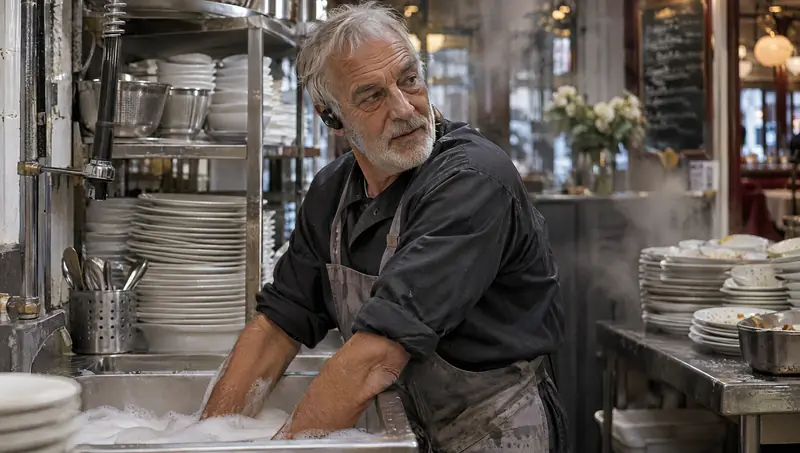
Voice brings information to people who work on their feet: fewer trips to the office, less embarrassment about reading. It has limits, and screens must stay.
Future of work
10 changes in the restaurant of tomorrow
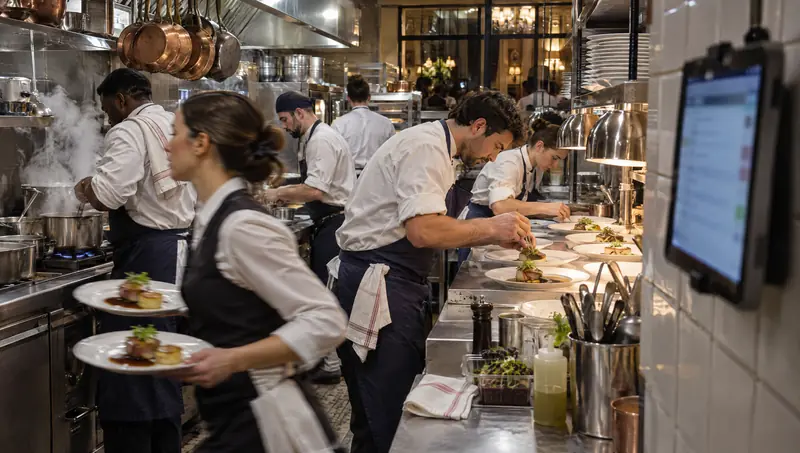
Information at the station, dated procedures, checks logged during the task, AI for managers: ten changes already under way, and what can go wrong with each.
Future of work
5 reasons to adopt a voice assistant, and 5 reasons not to
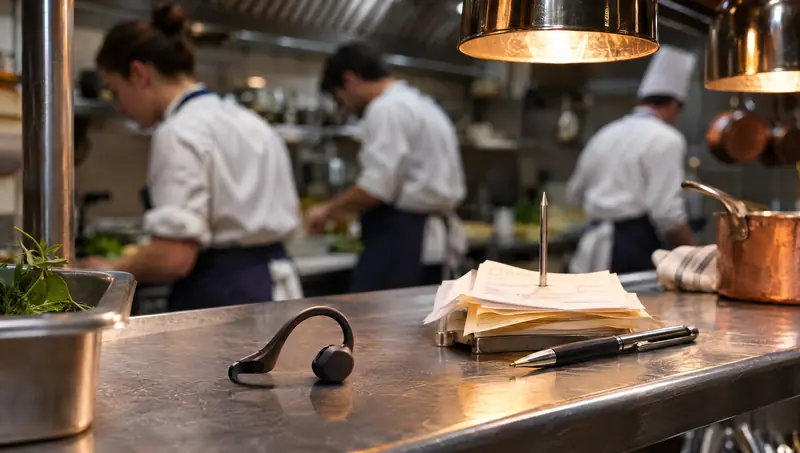
A voice assistant helps when hands are full and know-how is written down. It disappoints mid-rush, front of house, with no procedures or a team not on board.