
If a food safety procedure is wrong, the operator of the establishment answers for the safety of the food, even when the procedure came from a template, a consultant or a piece of software. The tool distributes the establishment's procedures; it is not their author, and the vendor answers for what it promised in its contract. An employee who follows the instruction in good faith is not the first in line. The best protection for everyone: a named, dated, versioned sign-off.
Thursday, 10:30 am, the stock sheet
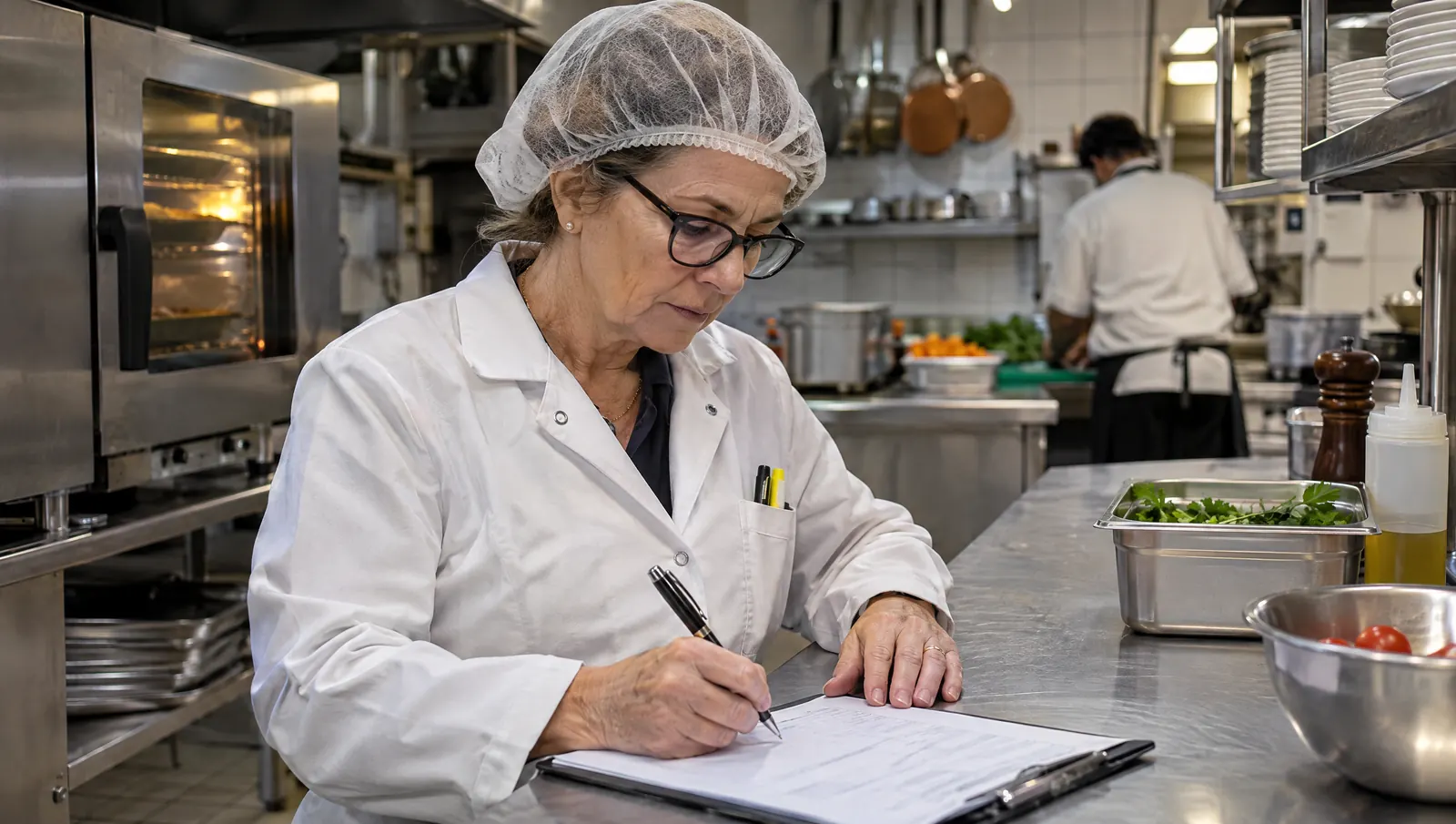
Kenza is quality manager for three restaurants. On her Thursday round, at the second site, she rereads the sheet "Cooling stocks and broths" on the steel counter.
Step 3: "Let the stock cool on the worktop before putting it in the blast chiller." She reads it twice. The group's procedure says the opposite: into the blast chiller as soon as cooking ends, in shallow trays.
She asks Roland, the chef de partie. "That's the sheet I was given when I started. I've followed it to the letter for two months."
The sheet has no date and no signature. Nobody knows who wrote it. Kenza thinks of the question that would come if a guest fell ill: who is responsible? Roland, who followed it? The software, which displayed it? Herself, for never having reread it?
(Kenza, Roland and their restaurants are fictional.)
What EU food hygiene law says
This article is not legal advice. It describes the broad principles under EU law, with French examples, and a legal professional is still needed for a specific case.
The operator answers for what happens under its control
Regulation (EC) No 178/2002, the foundation of EU food law, provides in Article 17 that food business operators ensure, within the businesses under their control, that food meets the requirements of food law, and verify that those requirements are met.
Regulation (EC) No 852/2004 on the hygiene of foodstuffs puts it more bluntly: Article 1 states that primary responsibility for food safety rests with the food business operator. Article 5 requires it to put in place, implement and maintain procedures based on HACCP principles.
A bought procedure is still your procedure
The verbs matter: put in place, implement, maintain. The text does not say "buy" or "download". A template from a consultant, an industry guide or a software package is a starting point. As soon as the establishment uses it, it is the establishment's procedure, and it is up to the establishment to check that it fits its kitchen, its equipment and its products.
Who answers for what
The tool distributes, it does not author
Procedure software stores, displays and shares what the establishment put into it. It does not know your blast chiller or the depth of your trays. If the stock sheet is wrong in the tool, it was wrong before it went in, or someone edited it badly. The tool just showed it faithfully.
The vendor answers for its commitments
The vendor has obligations, but they are contractual: show the right version, not lose data, respect access rights, warn you of an incident. Under French law, a party that fails to perform a contractual obligation can be ordered to pay damages (Civil Code, art. 1231-1); other countries have equivalent rules. If the tool shows an old version instead of the one you approved, that is the vendor's failure. If the approved version is wrong, it is yours. Read your vendor's terms: they say what it promises, and what it does not.
The employee who follows the procedure
In France, the Labour Code requires every worker to take care of their own health and safety and that of others "in accordance with the instructions given by the employer", adding that this has "no bearing on the principle of the employer's liability" (art. L4122-1). Towards a guest, the Civil Code makes employers liable for damage caused by their employees in the course of their duties (art. 1242), and the Cour de cassation has held that an employee acting within the limits of their assignment is not personally liable to third parties (Ass. plén., 25 February 2000, no. 97-17.378). Many legal systems reach a similar result through vicarious liability.
Put simply: Roland, who followed the sheet he was given, is not the first who has to explain himself. Things change if he knowingly departs from a correct procedure.
The person who signs off
The quality manager, head chef or general manager who signs a procedure does not become liable in place of the business. But their signature turns an anonymous text into a traceable decision of the establishment. That is exactly what the stock sheet lacked.
Why sign-off makes all the difference
A procedure with no author and no date protects nobody. The establishment cannot show it controls its risks, the employee cannot show they followed the right version, and the vendor cannot show it displayed what it was given.
A useful sign-off comes down to four things:
- The name of the person who approves, with their role.
- The approval date and the date it comes into force.
- A version number or date, visible on the sheet, on screen and on the paper copy.
- Previous versions, kept with the period during which they applied.
Until someone has signed it, a procedure remains a draft, whether it came from a colleague, a template or an AI, and the business will struggle to defend it in front of an inspector.
The situations at a glance
| Situation | Who answers first | How to protect yourself |
|---|---|---|
| Procedure written in-house, wrong | The operator | Review by a competent person, named and dated sign-off |
| Consultant's or vendor's template adopted without review | The operator, then the provider under its contract | Adapt the template to your equipment before publishing it |
| Procedure drafted with the help of AI | The operator | Treat it as a draft until a human has approved it |
| The tool shows an old version | The operator towards third parties, the vendor under its contract | Visible dated version, history, terms actually read |
| An employee follows the wrong procedure in good faith | The operator | Train on the version in force, welcome reports of errors |
| An employee departs from a correct procedure | The operator, and the employee in their relationship with the employer | Explain the reason for each step, check by observation |
| Wrong network procedure applied by a franchisee | The franchisee as operator, then the franchisor under the agreement | Review network instructions, declare local variations |
The middle column always reads the same way: the establishment answers first, the others answer for what they promised.
Common mistakes
- Believing the tool or the consultant "carries" compliance. They carry their commitments, not your food safety plan.
- Publishing a template as is, without adapting it to your chiller, your oven, your trays.
- Leaving sheets with no date and no signature, on paper as on screen.
- Fixing the tablet and forgetting the laminated copy on the wall.
- Blaming the employee for following the sheet. They did what they were asked; fix the sheet and encourage the report, as described in a wrong step in a checklist: flag it, fix it, for everyone.
- Deleting the old version. On the day of an incident, you need to know what was required on which date.
What to measure
- The share of procedures in use that carry an approver and a date. The target is all of them.
- How long ago critical procedures (cooling, cooking, allergens, cleaning) were last approved, compared with equipment or recipe changes since.
- The time between a report of a wrong step and the new version going live.
Where Tsuno fits
Tsuno stores each site's procedures and files, runs opening, closing and prep checklists from templates, and keeps their history. Temperature readings have thresholds, and an out-of-range reading alerts the site's managers. Audits have their grids and history. Everyone sees and edits only what their role and sites allow, and every action goes through a confirmation recorded in the log, with who, when and what.
Tsuno does not write your procedures for you and does not certify them. When AI helps draft, as with the welcome booklet, you review the text. A connection suggested by the AI is flagged as such, never presented as a fact. San, the smart voice assistant for teams, gives access to the establishment's sheets within the person's rights; San Voice is available as a demo. If a sheet is wrong, San will show it wrong: accuracy remains with the establishment that approved it.
A full sign-off workflow (named approver, date, version, history and sharing with the team) is what a good tool should offer, and it is what we are building. To try it on your own sheets, see Tsuno San and the access rules on Trust and data.
Further reading
For the overall framework, read AI, voice and privacy at work: the guide. On allergens, where approximation is not forgiven, see allergens: why no tool should answer from memory. In a network, the same question arises between franchisor and franchisee: franchises: what head office sees, and what it does not. And for procedures that stay up to date, how to replace procedure binders without creating a digital graveyard and digital HACCP: what software should actually remove.
Key takeaways
The operator answers for the safety of its food, whatever the procedure's origin, and the tool only distributes it. A named, dated, versioned sign-off is what protects the establishment, the employee who follows the sheet and the vendor who displays it.
Frequently asked questions
Who is responsible for food safety in a restaurant in the EU?
The food business operator, meaning the business that runs the establishment. EU law (Regulations (EC) No 178/2002 and No 852/2004) gives it primary responsibility for the safety of the food produced under its control.
If my software shows a wrong procedure, is the vendor to blame?
The vendor answers for what it committed to in its contract, for example displaying the version you approved. The content of the procedure belongs to the establishment that wrote or adopted it. Towards inspectors and guests, the operator answers first.
Can an employee be disciplined for following a wrong procedure?
Employees must follow their employer's instructions. If they apply in good faith the procedure they were given, the fault lies first with the procedure. For a specific case, only a legal professional can give an opinion.
Is a procedure drafted with the help of AI valid?
It can be, provided a competent person in the establishment has read, corrected and approved it, with their name and a date. Without that sign-off, it is a draft, whatever tool produced it.
How do you prove a procedure was approved?
Keep, for each version, the name of the person who approved it, the approval date, the period during which it was in force and the previous versions. That is what lets you say what was required on the day of an incident.
Keep reading
Hygiene and compliance
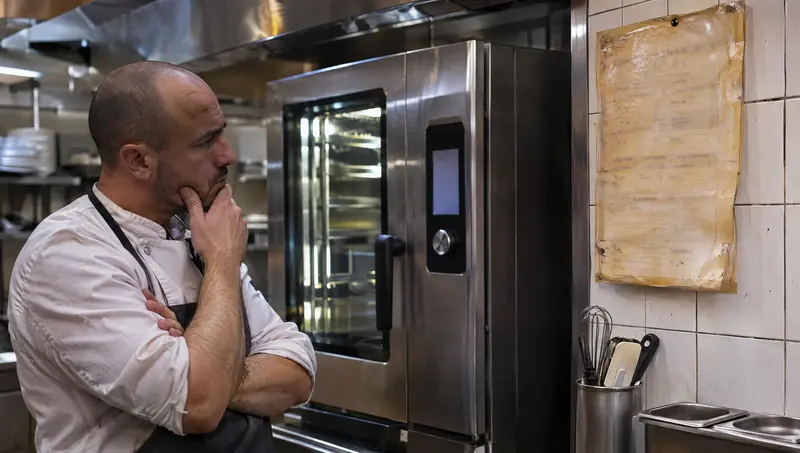
An outdated procedure is more dangerous than a missing one
A missing procedure makes people ask; an outdated one gets followed with confidence. Date every sheet, name an owner, take old printed copies down.
Hygiene and compliance
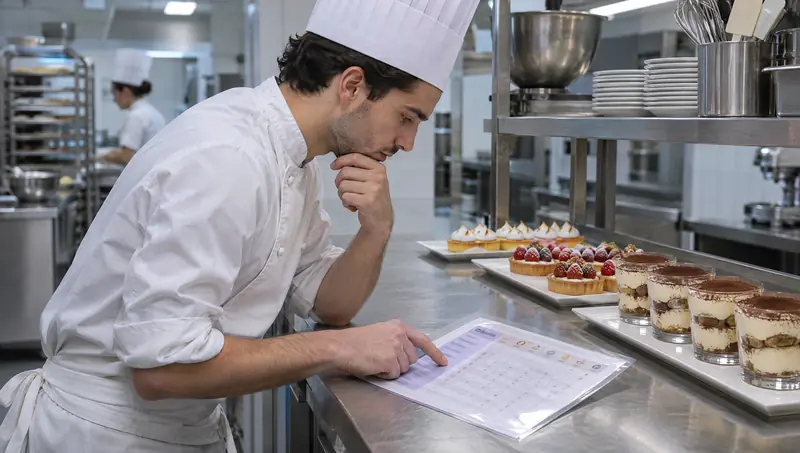
Allergens: why no tool should answer from memory
On allergens, no tool should answer from memory: it shows the dish's approved, dated sheet, or says it has none and refers you to the person in charge.
Hygiene and compliance
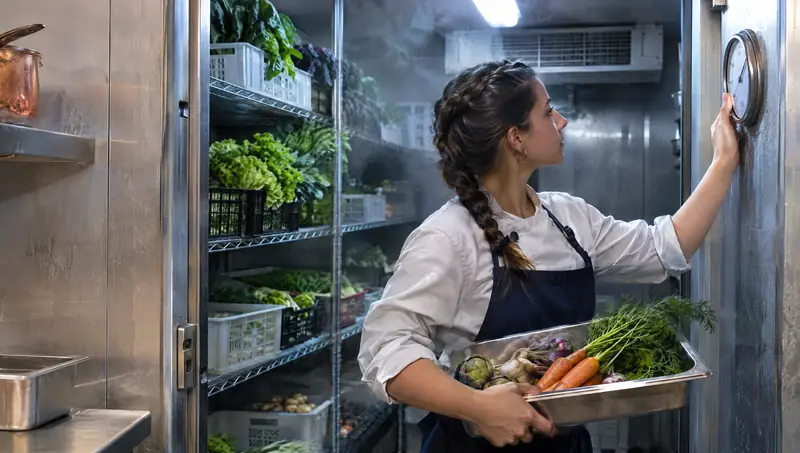
HACCP checks with busy hands: no more greasy pen
A useful temperature check is logged when you read the thermometer, not that evening from memory. Saying it aloud keeps the real time, the person and next steps.