
A baker in the bakehouse, a cleaner at a client's building, a vineyard worker between the rows, a visitor guide at a museum: their need looks a lot like a kitchen porter's. They work on their feet, far from a desk, hands full, and their question comes up in the middle of the task. Tsuno already covers all four trades. Bringing San, the voice assistant, to them is something we are exploring carefully, because noise, signal, weather and the presence of the public change everything from one trade to the next.
Four scenes, the same interrupted task
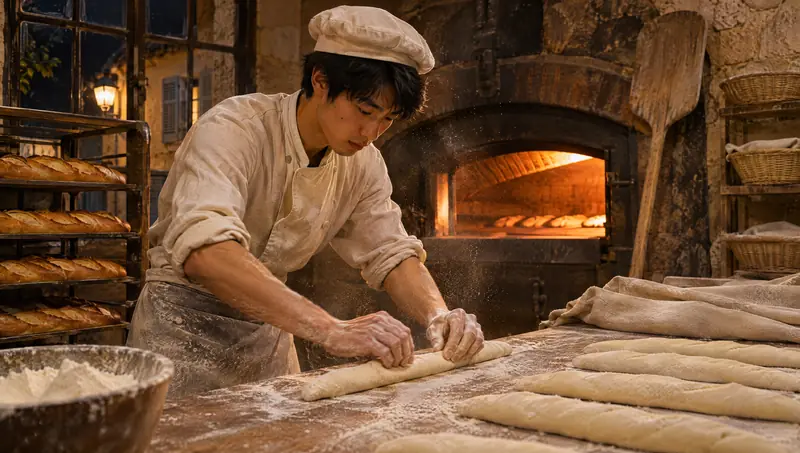
Tuesday, before dawn, in the bakehouse
It is 4:10 a.m. and Noémie is starting the second bake. The mixer is running, the oven is up to heat, there is dough on her fingers. Production changed a loaf recipe the day before, and she wants to check the hydration before weighing. The update exists in Tsuno, dated. But reading it means washing her hands, grabbing the phone and searching.
Wednesday, early morning, at a client site
At 6:05 a.m., Marcel is covering for an absent colleague in an office building he does not know. He has the door code and the checklist on his phone. On the second floor he finds a room that is not on his list and wonders whether it is part of the contract. His gloves are on and the floor scrubber is running.
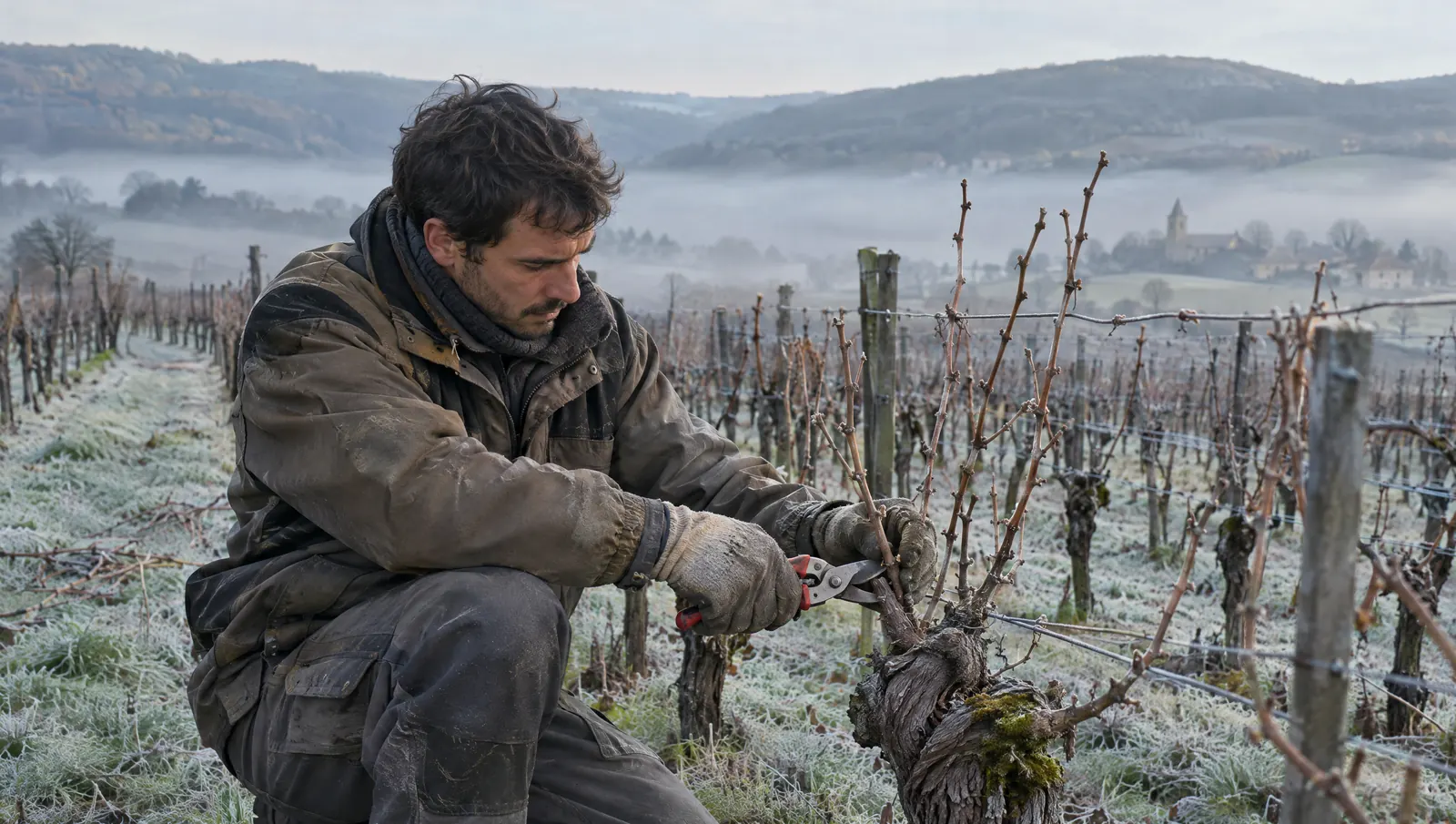
Thursday morning, in the vine rows
It is 7:30 a.m. Matthias is a seasonal worker on his first pruning at this estate. The vineyard manager explained the instruction to the whole crew at the start of the morning. Three rows later, in front of a vine that looks different from the others, Matthias hesitates. The manager is at the far end of the plot.
Saturday afternoon, at a visitor site
It is 2:50 p.m. and Romane is on duty as a visitor guide. A school group arrives in ten minutes and one room has just been closed after a leak. She needs to adjust the route and check the evacuation procedure for this group, without leaving the front desk where visitors are waiting.
(Fictional scenes and characters.)
Each time, the instruction is written down somewhere in Tsuno. Noémie has dough up to her wrists, Marcel is steering the floor scrubber, Matthias has the secateurs in hand and Romane has a dozen parents in front of her.
Why the same need shows up everywhere
Know-how sits with a few people
Each of Tsuno's trade pages says it in its own way. In a bakery, the know-how sits with a few people. On an estate, the rootstock, the soil and the corner that frosts live with one person. In a museum, the tour lives in the guides' heads. In cleaning, codes, keys and zones are held by everyone differently. This is not a kitchen problem.
Teams rotate
Harvest crews, summer guides, fill-ins sent to a site at the last minute, a new counter clerk starting on a Saturday at 6 a.m.: each time, the instruction is repeated to someone new. That is exactly where a tool that remembers can help.
The screen shows up at the wrong moment
A phone is useful at the start and end of a task. In the middle, it gets in the way: dirty hands, gloves, tools, people around. That is the situation that gave rise to San in the kitchen, as we explain in why talk to your tools when your hands are full.
What San could bring, trade by trade
One rule first. San only knows what Tsuno already holds, and it acts within the person's permissions. It does not invent a baking or pruning instruction: it finds the one the business wrote and approved. Outside restaurants, everything below is a direction we are working on, not a delivered feature.
In bakeries
Tsuno Bakery keeps product sheets (ingredients, allergens, selling tips, storage, approved and dated), updates sent from the bakehouse to the shops, opening and closing checklists, temperature logs and cleaning. For Noémie, San could read the new loaf's update aloud, or say what is left on the opening checklist. At the counter, a question about sesame calls for the approved sheet, not an answer from memory: that is the principle we apply to allergens. See the Bakeries page.
In cleaning and site services
Tsuno keeps a file for each site (access, hours, zones, instructions, special rules, checklist) and the visit on the phone: start, finish, tick the checklist, report an incident with a photo. Crew members only see their own visits. For Marcel, San could answer "is this room in the contract?" from the site file, or draft an incident report that Marcel confirms before it goes out. See the Services page.
On wine estates
Tsuno keeps plot records, work plans, sprays with a three-state pre-harvest interval check (cleared, blocked, to verify), harvests and weigh-ins. For Matthias, San could repeat the pruning instruction written for that plot. On sprays, Tsuno's rule applies to San too: an unknown interval is never counted as zero, and the answer stays "to verify" until a person makes the call. See the Vineyards page.
At cultural venues
Tsuno keeps tour routes and room notes, language versions, opening and closing checklists per space, evacuation procedures and a daily log. For Romane, San could pull up the evacuation procedure for a school group or say which guides are trained on the German version. But not in front of visitors. See the Cultural venues page.
What changes from one trade to another
Noémie's bakehouse and Matthias's plot do not put the same demands on a voice tool. The table below sums up what would need checking in each trade.
| Trade | Noise | Signal | Outdoors and hands | Public | What to test first |
|---|---|---|---|---|---|
| Bakery | Mixer, oven, extraction | Usually fine | Flour, heat | At the counter only | Voice in bakehouse noise |
| Cleaning, services | Scrubber, vacuum | Patchy: basements, car parks | Gloves, chemicals | Building occupants | Use at a client's premises, not the employer's |
| Vineyards | Low, except tractor and wind | Often weak in the rows | Rain, cold, gloves, shears | None | Signal and weather |
| Cultural venues | Low, but silence expected | Thick walls, cellars | Few constraints | Constant | Discretion in front of visitors |
Noise
The bakehouse and the floor scrubber raise the same question as a dish pit in the middle of service: does the tool understand through the noise, and can the person hear it? You cannot settle that on a spec sheet. You check it on site.
Signal
A hillside vineyard, an underground car park or a vaulted cellar does not always have coverage. A good field tool should say clearly when it cannot answer, instead of pretending. Between the rows or in a cellar, that means planning a simple fallback: the instruction read on screen before heading out, or the printed sheet in a pocket.
Outdoors
Gloves, rain and cold make a screen close to useless between the rows. That is the strongest case for voice, and also the toughest ground for the hardware. San Audio, the hands-free experience, is under exploration and testing for exactly this reason: we do not present it as ready.
The public
In a kitchen, nobody sees the earpiece. In a gallery, a guide talking to a device in front of a group disrupts the visit. What we recommend, as in restaurants, is to use voice out of the public's sight: at the front desk before opening, in storage, in the guides' office. In front of visitors, the screen or the printed note is often the better choice. We compare the two in San on screen, San by voice: when to use which.
Common mistakes when moving a tool from one trade to another
- Copying the kitchen use case as it is. A vine row is not a dish pit, and a museum is not a pass.
- Starting with the tool instead of the instructions. If the site file or plot record is empty, voice has nothing to repeat.
- Forgetting who is around. A cleaner works in premises that belong to a client, not to their employer: using a microphone there needs to be explained and agreed.
- Announcing too early. A crew that heard "it works everywhere" and then finds no signal between the rows will not trust it again.
- Letting the tool answer on safety. Pre-harvest intervals, evacuating a group, allergens: the tool shows the approved instruction, it does not summarize it.
What to measure if you run a trial
- How often someone has to stop a task to look up an instruction, before and after.
- Questions left unanswered, and why: missing instruction, no signal, noise. Each one tells you what to fix first.
- Voluntary use after two weeks, role by role. If nobody uses it in the rows, that is an answer too.
Where Tsuno and San fit
Today Tsuno covers bakeries, cleaning and services, wine estates and cultural venues, with what their pages describe: product sheets, instructions, checklists, visits, plots, daily log. San, on the other hand, was born in a kitchen, and only its voice interaction (San Voice) is available today, as a demo. Outside restaurants, we would rather trial with a few willing teams than promise anything, and we will say plainly if voice is not the right answer for a trade. San's rules are the same in every trade; they are on the Tsuno San page, along with the status of each track.
Go further
For the broader view of these trades, read the future of work in hands-on jobs. On voice itself, see what voice changes for people who work on their feet. For San as a whole, the pillar page Tsuno San: the work companion for frontline teams. And for the limits that hold in every trade, what San never does. For the bakery case in detail, read a work assistant for bakeries, from the bakehouse to the shop.
Key takeaway
In the bakehouse, at a client site, between the rows or in a gallery, the need is the same: a reliable instruction in the middle of the task, without stopping what you are doing. Tsuno already holds those instructions for these four trades; bringing voice to them is a direction we will test in the field, trade by trade, before we announce it.
Frequently asked questions
Does Tsuno San work in bakeries or in trades other than restaurants?
San was born and tested in restaurants. Tsuno already covers bakeries, cleaning and client-site services, wine estates and cultural venues. Bringing San to them is something we are exploring, not a delivered offer.
What is the status of San Voice, San Audio and San 360?
San Voice, the voice interaction, is available in demo. San Audio, the hands-free experience, and San 360, a broader vision of operational support, are under exploration and testing.
Is a voice assistant useful in an outdoor job like vineyard work?
The need is real: hands busy, gloves on, seasonal crews that change every year. But outdoor work raises its own questions, such as signal between the rows or wind. A good tool has to be proven on site before it is offered.
Can staff use a voice assistant in front of visitors in a museum?
Our usage principle is to keep voice behind the scenes, out of sight and earshot of visitors. In a gallery, a phone or a screen is often more discreet than speaking out loud.
What could San do for a cleaning crew member at a client site?
Rely on what Tsuno already holds for that trade: the site file with its access details and instructions, the visit checklist and incident reporting. San could make them available by voice, within the crew member's own permissions, and they only see their own visits.
Keep reading
Future of work
A work assistant for bakeries, from the bakehouse to the shop
In a bakery, a voice assistant helps when it repeats what the baker wrote, in the bakehouse at night or at the counter by day, and points to the approved sheet.
Future of work
10 changes in the restaurant of tomorrow
Information at the station, dated procedures, checks logged during the task, AI for managers: ten changes already under way, and what can go wrong with each.
Future of work
5 reasons to adopt a voice assistant, and 5 reasons not to
A voice assistant helps when hands are full and know-how is written down. It disappoints mid-rush, front of house, with no procedures or a team not on board.